
Best Large Wall Art for Modern Homes: Your Complete 2026 Style & Sizing Guide

By: KoolyDesign l April 2026

There's a moment — you know the one — where you stand in the center of a freshly decorated room and feel like something is still missing. The furniture is right. The lighting is warm. But the walls? They're doing exactly nothing.

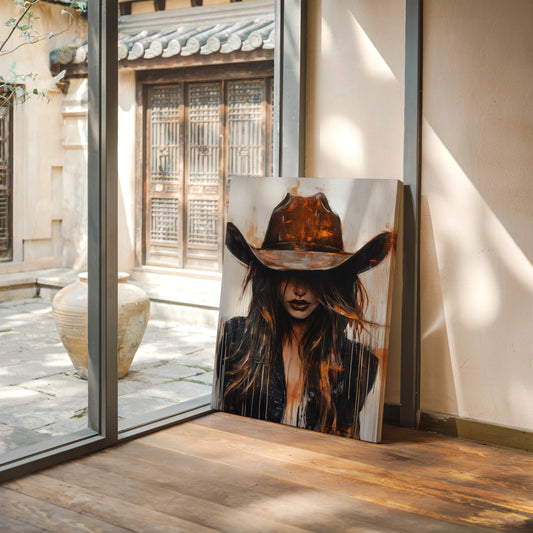
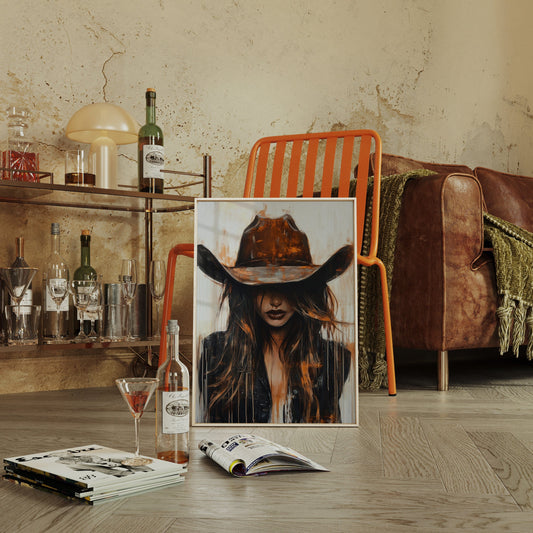
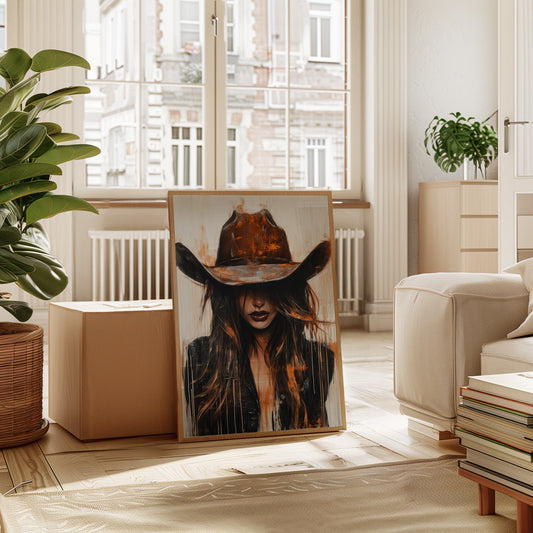
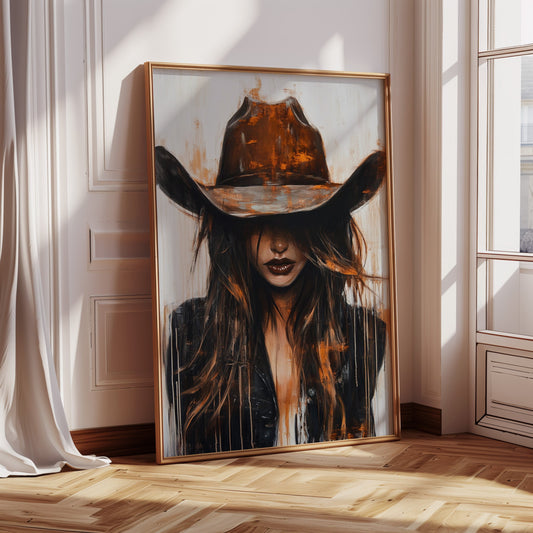
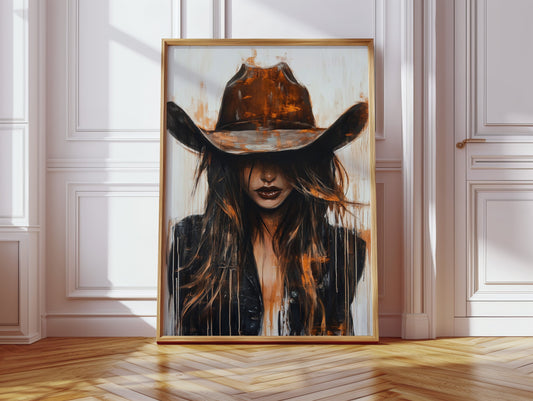
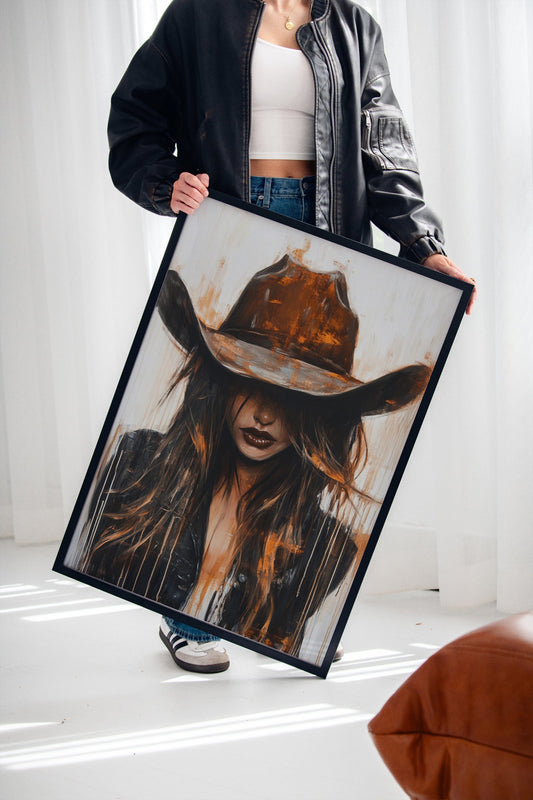
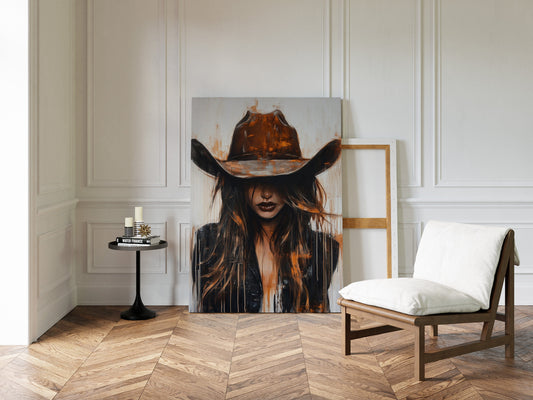
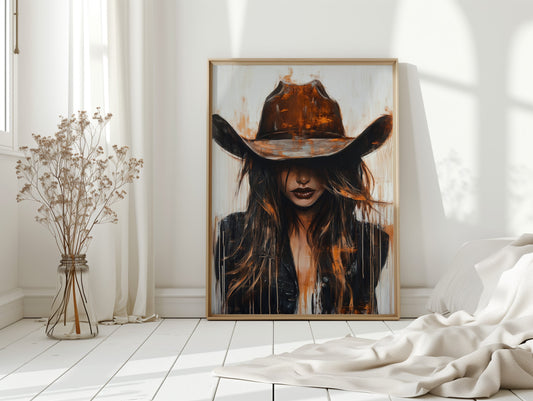
That's the power of large wall art, and why it's one of the highest-impact decisions you can make for a modern home. A single oversized piece doesn't just fill space — it anchors a room, defines a mood, and tells everyone who walks through your door exactly who you are.

Whether you're working with a soaring open-plan living room, a bedroom that needs a sanctuary feel, or an entryway that should make a first impression worth remembering, this guide has everything you need: 2026's most compelling aesthetic trends, a foolproof sizing formula, a professional hanging guide, and our favorite Kooly Designs collections to bring it all together.

Why Scale Changes Everything in a Modern Home

Visual Anchoring in Open-Plan Spaces

Modern homes — with their open-plan layouts and seamless flow between kitchen, dining, and living areas — can sometimes feel beautiful but unmoored. There's no natural boundary to tell your eye where to look, so the space can feel visually restless.

A large piece of wall art solves this immediately. In environmental psychology, this is called a "visual anchor" — a dominant focal point that gives the brain something to organize the rest of the space around. The result is what designers call cognitive ease: a state where a room feels instinctively comfortable and well-composed.

A single oversized canvas will always outperform a gallery wall of small prints in an open-plan setting — not because the small prints aren't beautiful, but because the brain has to work too hard to process many competing elements. One large, considered statement piece is the design equivalent of a deep breath.

The Psychology of a Statement Piece

Buying large wall art isn't purely a decorative decision — it's a psychological one. Research in environmental design points to the idea that large-scale art in warm, organic tones (think sage greens, terracottas, warm ochres) can actively lower stress and foster a sense of grounding. In 2026, homeowners are increasingly treating their homes as restorative environments, and art selection has become a deliberate act of wellness curation.

There's also the aspect of intentionality. A large, curated piece signals something that a wall of prints simply can't: that this home has a vision, a point of view, a soul.

2026 Aesthetic Trends for Large-Scale Art

Biophilic Futurism and Organic Abstraction

The biggest shift in wall art for 2026 isn't a move away from nature — it's a move deeper into it. Designers are calling this Biophilic Futurism: art that abstracts natural forms at a grand scale. We're talking macro views of leaf structures, the fluid topography of ocean depths, the mineral layers of canyon walls — all rendered in large, immersive prints.

The result is art that doesn't just depict nature but creates the sensation of being inside it. Our Botanical Collection and Moody Landscapes / Moody Vista Collection are ideal expressions of this movement, with oversized prints that bring the organic world indoors in a way that feels fresh and modern rather than literal.

Warm Minimalism: The Antidote to Cold Spaces

Minimalism has evolved. The cold, stark aesthetic of the early 2010s has given way to something warmer, more considered, and more livable. Warm Minimalism layers earthy neutrals, soft textures, and organic shapes — and large-scale art is the perfect vehicle for this sensibility.

Think: a single oversized abstract print in sandstone, ivory, and warm terracotta, hung above a bouclé sofa. Simple, but deeply intentional. Our Warm Minimalism Collection was designed with exactly this aesthetic in mind — pieces that carry the room without overpowering it.

Meaningful Abstraction and Narrative-Driven Design

In 2026, buyers want art that says something. Abstract work has always been open to interpretation, but today's design-conscious shopper is drawn specifically to pieces that feel like they carry a story — work that is conversation-starting and emotionally resonant rather than decorative filler.

Our Modern Abstract Collection taps directly into this trend, with prints that layer emotion and depth into bold, expressive compositions. Pair one of these oversized pieces with your favorite natural materials — wood, linen, raw ceramics — and watch a room come fully alive.

How to Choose the Right Size Art: The Designer's Sizing Formula

One of the most common — and most fixable — mistakes in home décor is choosing art that's too small. A piece that gets "swallowed" by the wall or the furniture beneath it can actually make a room feel smaller and less cohesive. Here's how designers get it right every time.

Above Furniture: The 66–75% Rule

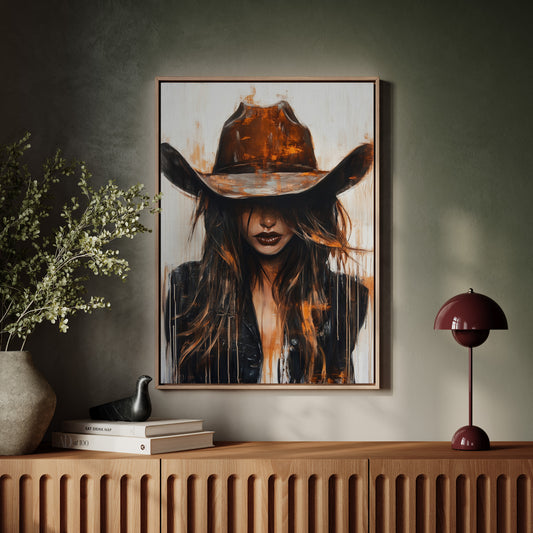
When hanging art above a sofa, bed, console table, or sideboard, the width of the art should be approximately 66% to 75% of the width of the furniture below it. This creates a visual "unit" between the two objects — proportional, intentional, and grounded.

  • 8-foot sofa: aim for art between 64–72 inches wide
  • 6-foot console: aim for art between 48–54 inches wide
  • King bed with headboard: aim for art between 60–72 inches wide

Leave a gap of 6 to 10 inches between the bottom of the frame and the top of the furniture. This keeps them visually linked without feeling cramped.

Statement Wall Art: Sizing an Empty Wall

On a statement wall with no furniture beneath it, the art should still be scaled generously — at minimum, two-thirds of the wall's width. Don't be afraid to go bigger. In a modern home with high ceilings, the bolder the better. Use painter's tape to mock up the size before you commit.

Triptychs and Multi-Panel Arrangements

For homeowners who want the scale of an 80-inch canvas without the logistical challenges of hanging one, a triptych is the perfect solution. Keep panel spacing tight — 2 to 4 inches between panels for side-by-side arrangements — and treat the entire arrangement as a single unit when calculating your placement.

The center of the full arrangement should still hit the 57–60 inch height mark. Check out our Gallery Wall Guide for a deeper look at multi-panel layouts.

Room-by-Room Guide: Large Wall Art for Every Space

Living Room: The Ultimate Focal Point

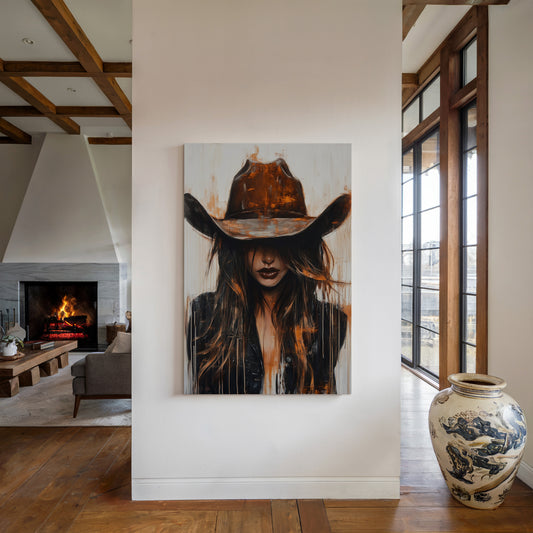
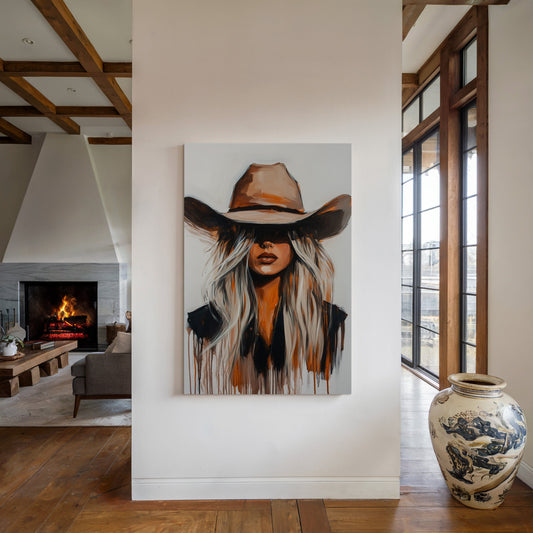
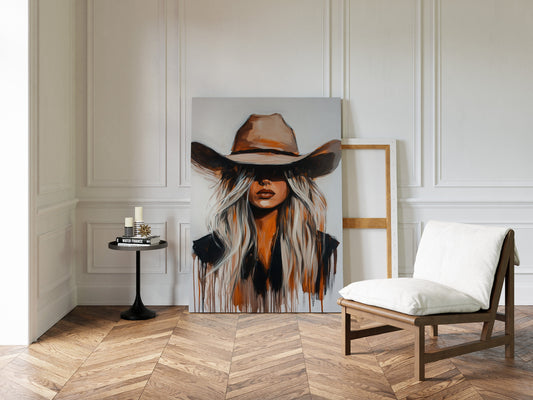
The living room is the highest-stakes room in the house for art placement — and the highest reward. Aim for a single oversized piece above the sofa as your anchor. Bold abstract work in warm neutrals or deep moody tones works brilliantly in open-plan spaces, while a Japandi-inspired organic print creates a serene, meditative atmosphere in a more intimate layout.

Browse our Japandi Collection and Modern Abstract Collection for living-room-ready statement pieces.

Bedroom: Art as Atmosphere

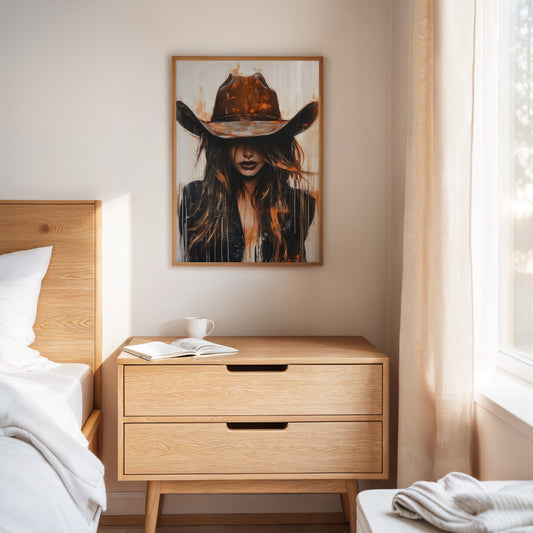
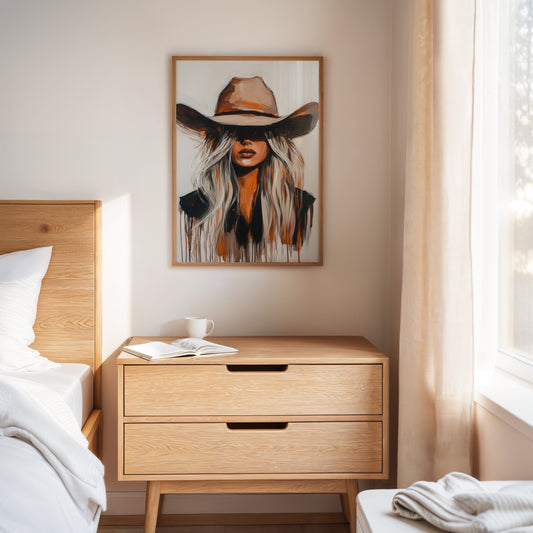
The bedroom calls for art that promotes calm and intentionality. A large print above the bed — treated as a headboard-level focal point — completely transforms the visual architecture of the room. Lean into soft color palettes: dusty blues, warm whites, muted greens, and deep charcoals all perform beautifully at scale.

Our Moody Landscapes Collection and Botanical Collection are particularly well-suited to the bedroom — bringing depth and grounding energy without overwhelming the space.

Home Office: Designed for Focus

Large art in a home office isn't decorative — it's functional. A piece with strong composition and clear visual rhythm gives the eye a natural resting place, which supports focus and creative thinking. Mid-century geometric prints and warm abstract compositions are perennial favorites for the modern home office.

Entryway and Hallway: First Impressions

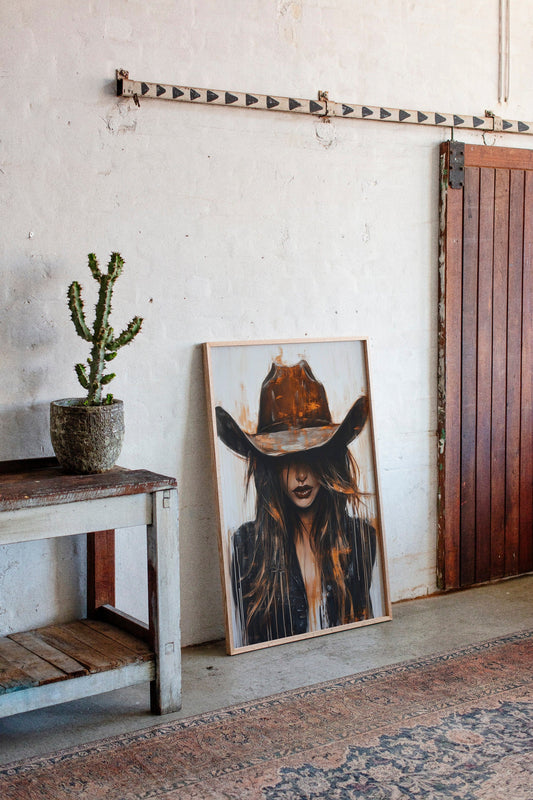
The entryway sets the tone for your entire home. A large vertical piece — or a bold, graphic horizontal print on a wide wall — makes an immediate statement. Consider the 6–10 inch spacing from any console table below, and don't be afraid to choose something unexpected here. This is where personality lives.

How to Hang Large Wall Art Like a Pro

Even the most beautiful piece of art underperforms if it's hung incorrectly. Follow these designer-approved rules for a result that looks intentional every time.

The Museum Standard: 57–60 Inches from the Floor

The center of any piece of art — regardless of its size — should sit approximately 57 to 60 inches from the floor. This aligns with the average human eye level and creates the most natural, comfortable viewing experience. The most common mistake? Hanging art too high.

  • Measure from the floor to 57–60 inches and mark lightly with a pencil
  • Find the center of your art piece horizontally
  • Use that intersection as your hanging point
  • For triptychs and multi-panel pieces, calculate the center of the full arrangement and apply the same rule

Lighting Your Statement Piece

Large art deserves intentional lighting. In modern homes, recessed wall washers or adjustable track lighting positioned at a 30-degree angle to the wall will highlight the texture of the canvas and the richness of the pigments without creating glare. If your space uses warm-toned bulbs (2700–3000K), the effect on earthy and warm-neutral art is particularly stunning.

What Makes High-Quality Large Wall Art Worth the Investment?

When it comes to oversized prints, quality deficiencies that a small piece might hide become impossible to ignore at scale. Here's what to look for:

  • High-resolution printing: Look for 300 DPI at the actual print dimensions — anything lower will lose clarity upon close inspection
  • Archival, pigment-based inks: These resist fading for decades, unlike dye-based inks that can shift within years — especially important in sun-drenched modern homes with large windows
  • UV-protective coating: An essential feature for longevity in bright, light-filled spaces
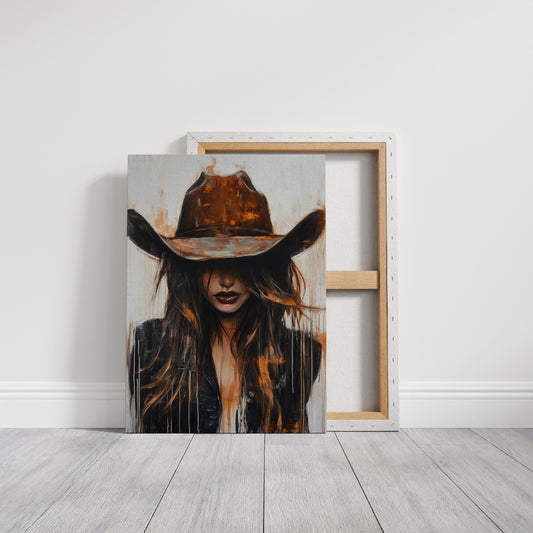
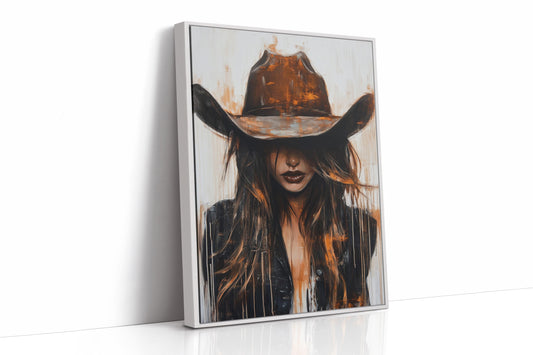
  • Gallery-wrap stretcher bars: For canvases over 36 inches in any direction, look for 1.5-inch kiln-dried frames with cross-bracing to prevent warping and maintain square corners over time
  • Substantial canvas weight: A cotton/polyester blend of 380–450 gsm offers the ideal combination of painterly texture and structural stability

At Kooly Designs, every large-format print is produced with these standards at the core — because a piece this significant should be made to last.

People Also Ask

How big should wall art be for a large wall?

As a general rule, your art should span at least 60–75% of the wall's width (or the furniture below it). For a large empty statement wall, err on the side of bigger — most people go too small. A 48x36 inch piece or larger is a good starting point for most modern living rooms.

What kind of wall art is popular for modern homes in 2026?

The leading trends for 2026 center on Warm Minimalism, Biophilic Futurism (large-scale organic abstractions), and Meaningful Abstract art. Expect earthy color palettes — warm whites, sage greens, terracottas — with an emphasis on pieces that feel curated and emotionally resonant rather than purely decorative.

How high should large wall art be hung?

The center of the art should be at approximately 57 to 60 inches from the floor — the museum standard. When hanging above furniture, the bottom of the frame should sit 6 to 10 inches above the top of the piece below it.

Is large wall art worth it?

Absolutely. A single oversized statement piece creates more visual impact than an entire gallery wall of smaller prints, establishes a room's focal point, and — when chosen thoughtfully — becomes a defining element of your home's identity. Think of it less as decoration and more as architecture.

The Takeaway: Go Big, Stay Intentional

Large wall art is one of the most powerful tools you have in a modern home. It's the difference between a room that's "done" and a room that's unforgettable. By understanding the principles of scale, placement, and quality — and pairing them with the right aesthetic for your space — you can create something genuinely remarkable.

Ready to find your statement piece? Browse our curated collections — from bold Modern Abstract prints to serene Japandi-inspired landscapes — and discover the art that's been waiting for your walls.

———

✦  ✦  ✦

Whether you're starting from scratch or adding to an existing collection, Kooly Design makes it easy to find pieces that play well together—even when they're beautifully different.

💌 Want more design tips? Sign up for our newsletter and get styling guides, new releases, and exclusive discounts delivered to your inbox.

📸 Show us your mixed-style walls! Tag @KoolyDesign on Instagram—we love seeing your creativity.

Ready to find your perfect pieces?

✨ Browse our complete wall art collections to discover hundreds of designs created specifically for modern homes like yours.

💌 Want first access to new designs and styling tips?: Sign up for our newsletter and join thousands of design lovers getting weekly inspiration delivered straight to their inbox.

📱 Follow us on social: Find daily design inspiration and see how other customers are styling their Kooly pieces on Instagram and Pinterest.

Your walls are waiting – let's make them beautiful together.

Back to blog

Leave a comment