
Cottagecore Farmhouse: What Happens When Modern Farmhouse Grows Up

By: KoolyDesign l April 2026

If you walked into a friend's house lately and caught yourself thinking, “Wasn't there a Live Laugh Love sign here last year?”—you're not alone. Modern farmhouse has entered its awkward teenage phase. The shiplap. The stark black-and-white palette. The faux-distressed everything. What once felt fresh started to feel like a Target ad someone had scrolled too long.

But something quieter is moving in. It has washed linen where the burlap used to be. Moody landscapes where the letterboards used to live. Actual patina—not the spray-painted kind. Meet the cottagecore farmhouse aesthetic: the grown-up, sensory-rich, story-driven evolution reshaping homes in 2026.

If modern farmhouse was a first draft, this is the novel.

What Is Cottagecore Farmhouse, Really?

Think of it as a hybrid with two distinct parents.

From cottagecore, it inherits the romance: the love of nature, the handmade feeling, the unhurried pace, the sense that a room should tell the story of a life well-lived. From modern farmhouse, it borrows the bones: clean silhouettes, functional layouts, livable neutrals, and architectural clarity that keeps a room from drowning in its own charm.

The hybrid lands in the sweet spot between them. It's not twee like pure cottagecore can read—no mushroom fairies, no toile overload. It's not sterile like late-stage modern farmhouse became—no shiplap shrines, no barn doors installed on bedrooms that never saw a barn. It's the version where the farmhouse finally moved to the country and let the vines grow in.

Design writers are calling this chapter “Modern Heritage”—a focus on curated history, authentic materials, and pieces that wear in rather than out. If you had to sum the whole thing up in two words, that's it: curated history.

Why Modern Farmhouse Needed to Grow Up

Modern farmhouse didn't fail. It just ran out of things to say.

When the Fixer Upper era peaked in the 2010s, it gave us plenty of good ideas: light-filled rooms, black-framed windows, plaster walls, warm wood, openness. But somewhere around the five-thousandth shiplap accent wall, the aesthetic stopped being a design philosophy and started being a template. Shiplap, sliding barn door, Edison bulbs, word art, repeat.

By 2025, design authorities were openly calling it fatigue. By 2026, mass-produced modern farmhouse lives in the same mental category as all-gray millennial apartments—once everywhere, now a subtle way of dating when a house was last decorated. Even Joanna Gaines has officially put shiplap to rest in favor of moodier, nature-forward rooms.

What people want now isn't the opposite of farmhouse. It's farmhouse with a history. With moss on the stone, patina on the brass, a family-dinner smell built into the linen. That's cottagecore farmhouse.

The 2026 Color Story: From Millennial Gray to Mature Warmth

If there's one defining shift, it's this: cool neutrals are out. Warm neutrals are home.

The 2026 palettes driving the aesthetic read like a walk through an English garden in late afternoon:

  • Cloud Dancer (Pantone's 2026 Color of the Year) — a soft, billowy white with warm undertones that replaces the clinical farmhouse white of the last decade.
  • Transformative Teal (WGSN/Coloro) — a deep, regenerative blue-green that acts as the room's quiet extrovert.
  • Patina Blue and Washed Linen (Etsy's 2026 forecast) — shades built around the idea of things that age beautifully.
  • Supporting neutrals — mossy sage, muddy terracotta, smoky pewter, sienna, saddle brown. The colors of a barn door that's been loved for forty years.

What ties them together is a quality that gray never had: they absorb light instead of reflecting it. They make a room feel exhaled. If you're starting with a lighter base and want art that carries Cloud Dancer's warm, breathable quality through the room, our Warm Minimalism collection is built around exactly this tonal language.

The Textures That Tell You Everything

If you walked into a cottagecore farmhouse home blindfolded, you should still know where you are. The textures carry the story.

  • Washed linen — named Etsy's texture of the year for a reason
  • Unfinished or oil-rubbed wood, not the sprayed-on “distressed” kind
  • Unlacquered brass, smoky pewter, and sand-cast iron hardware
  • Honed stone, natural limestone, and subtly veined marble
  • Heavy wool, visible mending, hand-loomed rugs
  • Ticking stripes, heritage plaids, large-scale William Morris florals

The giveaway of fake cottagecore farmhouse: everything feels too new. The real version feels like someone has already loved it.

The Wall Art That Defines the Aesthetic

Here's where a room either becomes cottagecore farmhouse or stays a Pinterest attempt. Wall art is the main mechanism for storytelling in this aesthetic—and it's the area where most people cut corners.

Moody Landscapes: The Heart of the Movement

The defining art subject of the hybrid. Think blue-hour countryside, misty coastlines with cottages tucked into the fog, dark forests at dusk, rain settling over a pasture. The palette runs through Transformative Teal, deep olive, slate, and muted sienna—landscape painting with emotional weather. This is where our Moody Landscapes and Moody Vista collections do their quietest, most powerful work.

Botanical Illustrations: The Cottagecore Half

The romantic half of the DNA shows up here. Look for vintage scientific prints (herbs, ferns, eucalyptus sprigs rendered with naturalist precision), pressed flower replicas, and William Morris heritage florals that date to the 1870s and still read as fresh. Biophilic design research suggests nature-based art lowers stress and boosts creativity—your walls functioning as a small, daily form of medicine. Our Botanical collection is the most direct way into this look.

Textile-Inspired and Still Life Prints

This is where “curated history” gets specific. Prints that echo the visual language of hooked rugs, vintage quilts, or embroidery hoops. Moody Dutch Golden Age–inspired still lifes with blooms in stone vases and heavy shadows. Modern scullery scenes—ironstone crocks, jars of oats, a wooden spoon caught in afternoon light. For pieces curated specifically around this aesthetic, our Farmhouse & Cottagecore collection is where to start.

Architectural and Ornithological Sketches

Line drawings of English stone cottages. Gouache studies of thatched roofs and arched doorways. Precise 19th-century bird sketches of swallows, owls, and mallards. These carry the quiet, storied quality the whole aesthetic is built on—and they're the pieces that make a guest actually stop and look.

Earthy Abstracts: The Hybrid Without the Literal

For rooms that need the hybrid mood without the literal imagery. Abstract pieces in clay, terracotta, and khaki with flowing, biomorphic lines. Works beautifully in spaces where cottagecore farmhouse meets Japandi warmth. If that's your room, browse our Japandi collection alongside Warm Minimalism for the right tonal overlap.

How to Style It, Room by Room

The working ratio for cottagecore farmhouse rooms is roughly 60/40 modern to cottage in decor, and 60/40 cottage to modern in architectural details. Here's how that plays out.

  • Kitchen — Standalone furniture-style islands, inset cabinetry, open plate racks, unlacquered brass hardware. A gingham sink skirt under moss-green cabinetry is having a real moment.
  • Living room — A slipcovered sofa in washed linen, a rugged wood coffee table with real weight, one large moody landscape anchoring a wall, and a small gallery of botanicals on another.
  • Bedroom — A curved wooden headboard, restorative plants (the fiddle-leaf fig is earning its keep), oversized botanical art above the bed in Cloud Dancer–toned mats rather than stark white.
  • Dining room — Symmetrical millwork, a heavy wood table, a single statement still life where a word sign used to go. Candlelight does the rest.
  • Entryway — A spindle-leg console, a ceramic lamp with warmth, and one framed architectural sketch to welcome everyone in.

What to Avoid (The Cringe List)

To keep the aesthetic on the right side of sophisticated, retire the following:

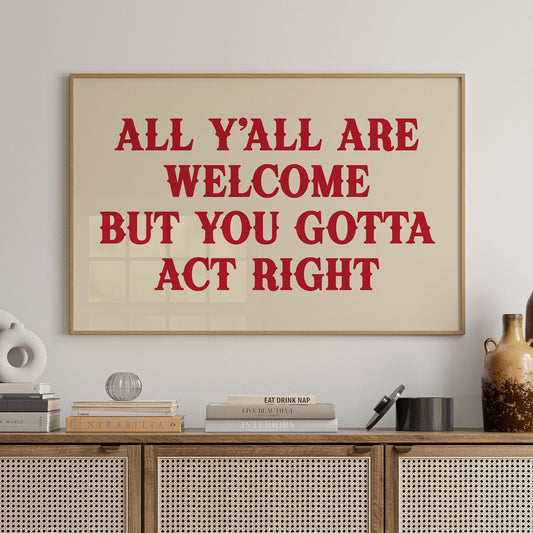
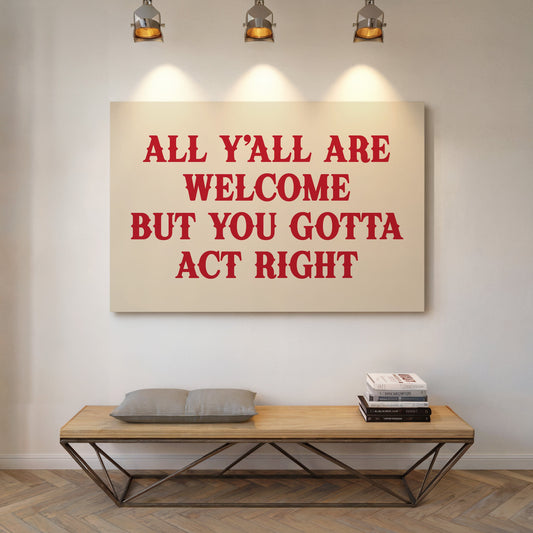
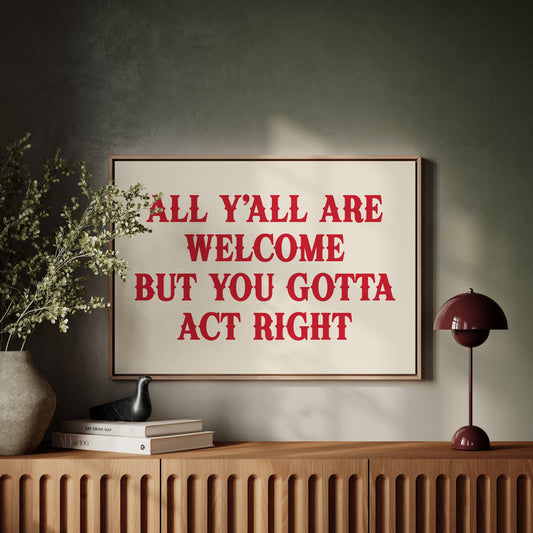
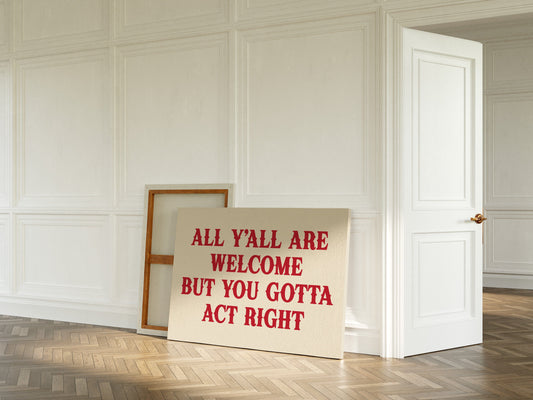
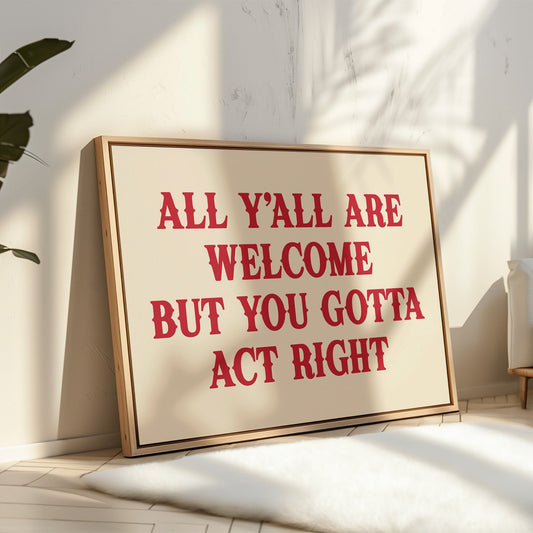
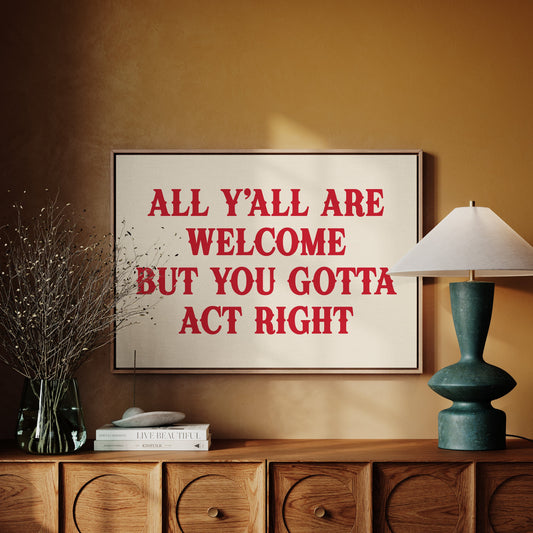
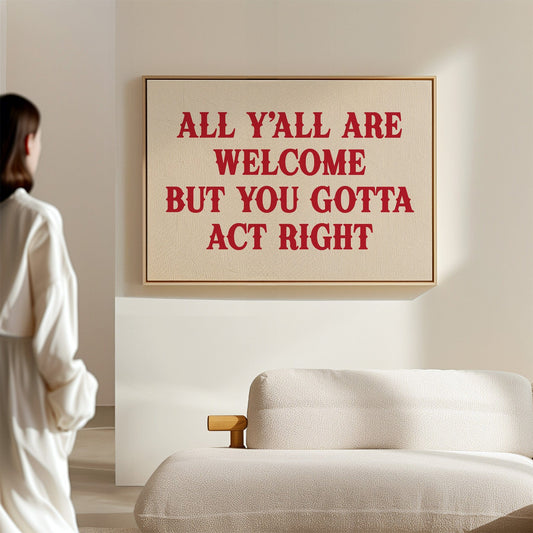
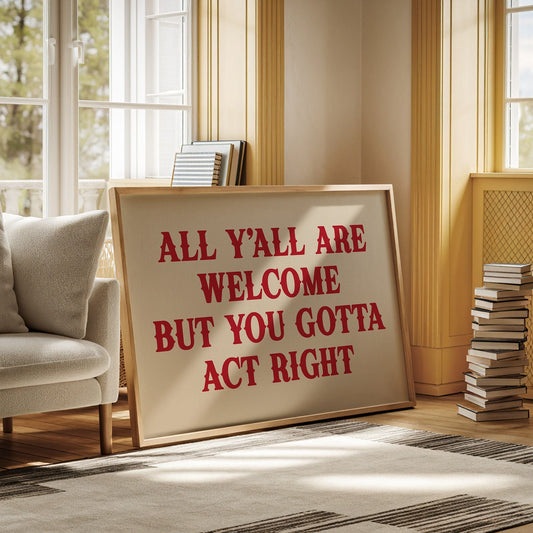
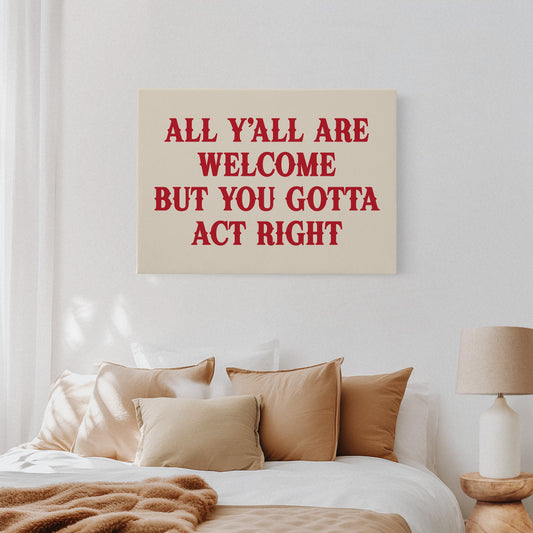
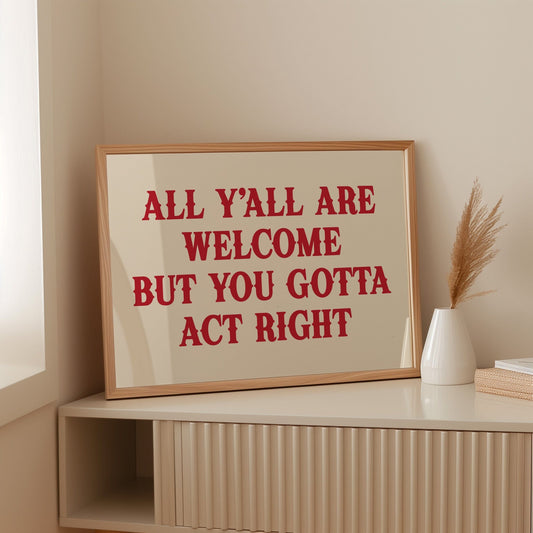
  • Wordy wall signs, letterboards, “Live Laugh Love,” “Gather,” and all their cousins
  • Fake-distressed or “chippy paint” mass-produced decor
  • Stark white mats and high-gloss frames (choose Cloud Dancer–toned mats and matte finishes)
  • Millennial gray on walls, furniture, or art
  • Scattered, unstructured gallery walls with no unifying element
  • The template look: shiplap + barn door + Edison bulb + word sign. If ten houses can have the same room, it isn't curated history.

The Gallery Wall, Done the Hybrid Way

Cottagecore farmhouse gallery walls are structured, not scattered. Anchor with one large statement piece—a moody landscape, a heritage floral, a large-scale botanical. Layer smaller complementary prints around it using a shared palette or unifying frame style. Mix frames intentionally: raw timber with thin brass, carved wood with honed black, but keep at least one element consistent across every piece. Use Cloud Dancer or ivory mats rather than stark white. And resist the urge to fill every inch—the empty space between pieces does half the styling. For a deeper walkthrough, our guide to mixing and matching gallery wall frames breaks down the exact ratios.

People Also Ask

What exactly is the cottagecore farmhouse aesthetic?

It's a hybrid style that blends the romantic, nature-forward spirit of cottagecore with the cleaner, more functional lines of modern farmhouse. The emphasis is on curated history—mixing quality modern pieces with authentic vintage accents, moody tones, and biophilic art.

Is modern farmhouse out for 2026?

The mass-produced, high-contrast version is declining. The shiplap-and-barn-door template has been officially retired by the design world (and by Joanna Gaines herself). But it hasn't disappeared—it's evolving into Modern Heritage and cottagecore farmhouse, both of which keep the bones and add back the soul.

How do I make my home feel cozy without the clutter?

Follow the disciplined edit. Instead of many small knick-knacks, choose a few high-impact statement pieces. Use oversized wall art to anchor a room. Build curated “happy corners” with two or three meaningful objects rather than distributing ten across every surface.

What color palette should I use for a cottagecore farmhouse home?

Move decisively away from cool grays. Start with warm neutrals like Pantone's Cloud Dancer as your base, then layer in mossy sage, muddy terracotta, or Transformative Teal for a color-drenched, cocooning feel. Brass and copper warm everything further.

What are the best wall art themes for this style?

Moody landscapes, vintage scientific botanical illustrations, textile-inspired prints (quilt or embroidery references), Dutch Golden Age–style still lifes, and earthy abstracts in clay and terracotta tones. Look for work that feels handcrafted and perfectly imperfect rather than graphic or mass-produced.

How do I make a rental home look like a modern cottage?

Lean on soft, movable elements: peel-and-stick gingham or heritage-floral wallpaper, layered linen curtains, wool throws, wicker baskets, and a statement gallery wall you can take with you. Wall art does more heavy lifting in rentals than almost anything else.

What frame style works for heritage wall art?

Natural wood frames with a matte or honed finish are the default. Avoid high-gloss or plastic. Slim brass, nickel, or smoky pewter frames work for a more modern traditional edge. Thick, ornate carved wood frames work for statement pieces.

Why is biophilic design so important in 2026?

It's a response to digital overload and climate anxiety. Bringing nature's rhythms into the home through botanical art, organic textures, and natural light has been shown to reduce stress and improve mental well-being. In a year defined by a “sensory exhale,” biophilic wall art is doing real work.

A Home That Actually Sounds Like You

Cottagecore farmhouse isn't a rebrand of the shiplap era. It's the quiet next chapter. It's what happens when we stop decorating for the photograph and start decorating for the person who wakes up in the room. The washed linen, the moody landscapes, the heritage florals, the honed wood frames—they aren't trends in the throwaway sense. They're small arguments for a slower, more storied kind of home.

And the wall art is where it begins. A moody vista above the sofa changes the whole tone of a living room. A set of vintage botanicals above the bed changes the way you sleep in it. These aren't decorations. They're the handwriting of the space.

Ready to start your own curated history? Browse our Farmhouse & Cottagecore collection , our Moody Landscapes , and our Botanical collection to find the pieces your walls have been waiting for. Or sign up for the Kooly Designs newsletter for first access to new releases, styling stories, and seasonal drops that fit the hybrid aesthetic you're building.

———

✦  ✦  ✦

Whether you're starting from scratch or adding to an existing collection, Kooly Design makes it easy to find pieces that play well together—even when they're beautifully different.

💌 Want more design tips? Sign up for our newsletter and get styling guides, new releases, and exclusive discounts delivered to your inbox.

📸 Show us your mixed-style walls! Tag @KoolyDesign on Instagram—we love seeing your creativity.

Ready to find your perfect pieces?

✨ Browse our complete wall art collections to discover hundreds of designs created specifically for modern homes like yours.

💌 Want first access to new designs and styling tips?: Sign up for our newsletter and join thousands of design lovers getting weekly inspiration delivered straight to their inbox.

📱 Follow us on social: Find daily design inspiration and see how other customers are styling their Kooly pieces on Instagram and Pinterest.

Your walls are waiting – let's make them beautiful together.

Back to blog

Leave a comment