
Poster, Canvas, or Framed Canvas? How to Choose the Right Wall Art Format for Your Room 

By: KoolyDesign l October 2026

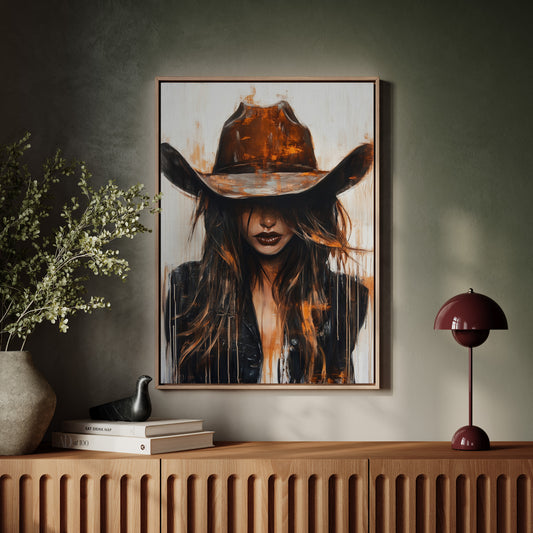
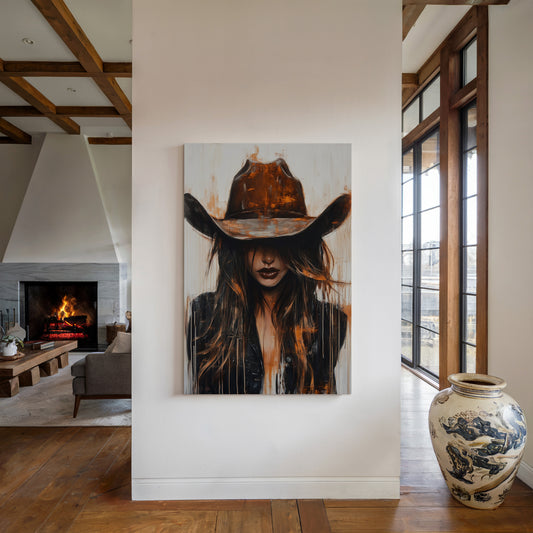
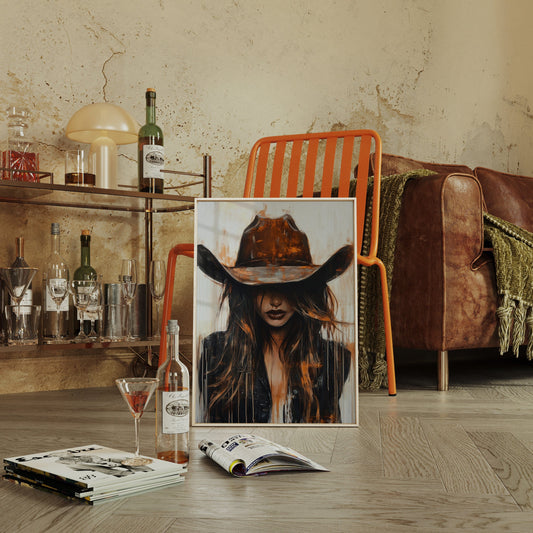
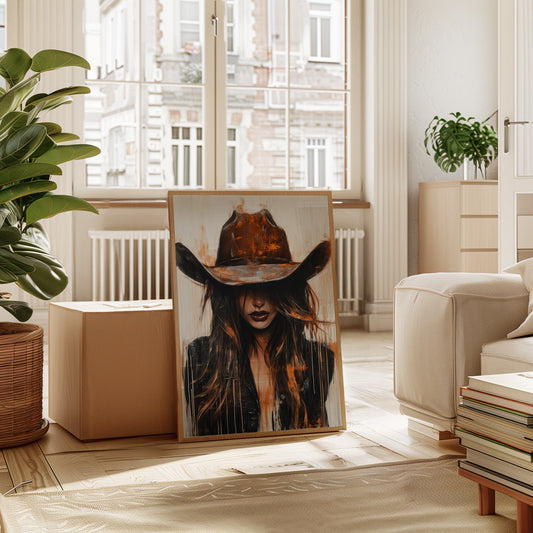
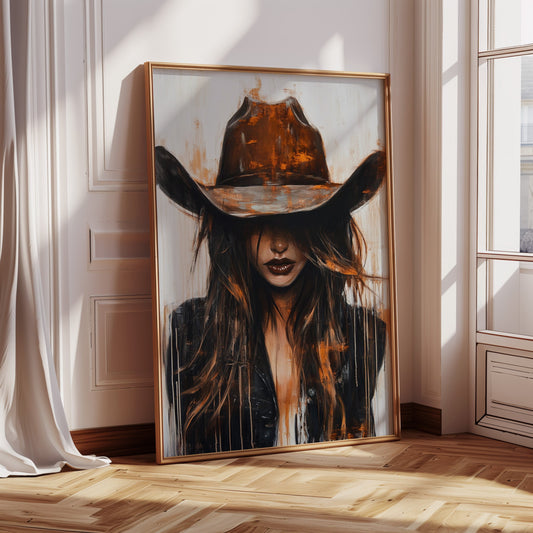
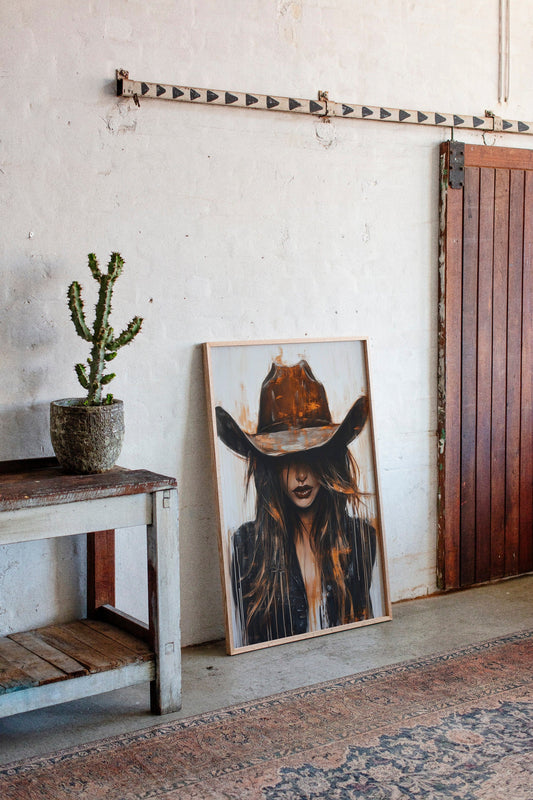
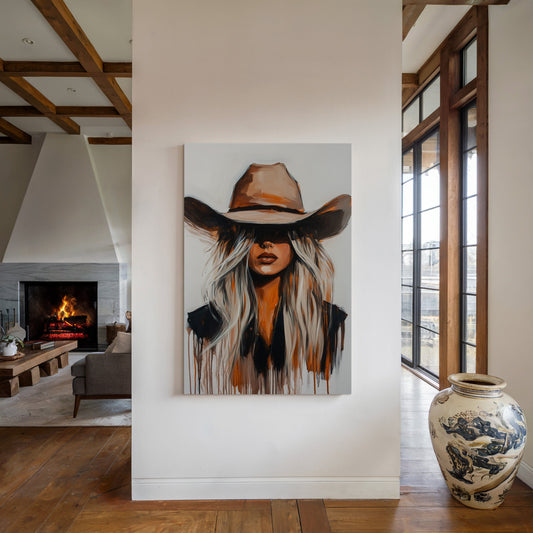
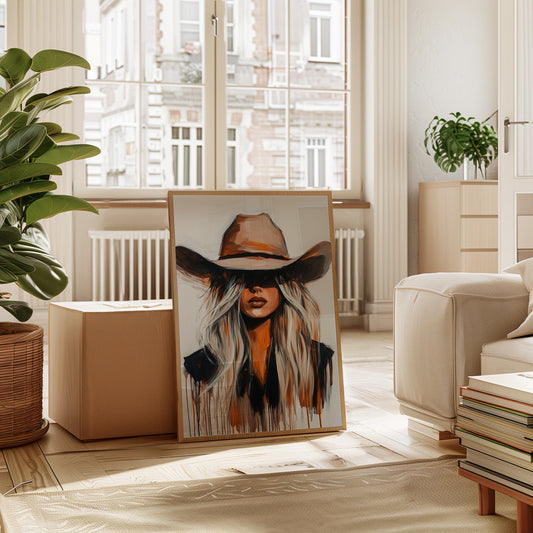
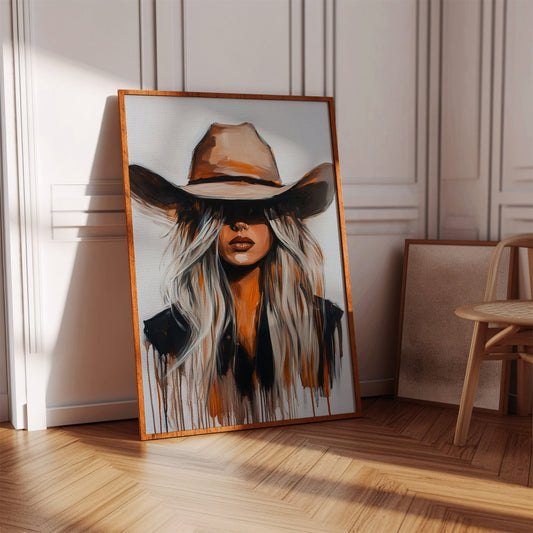
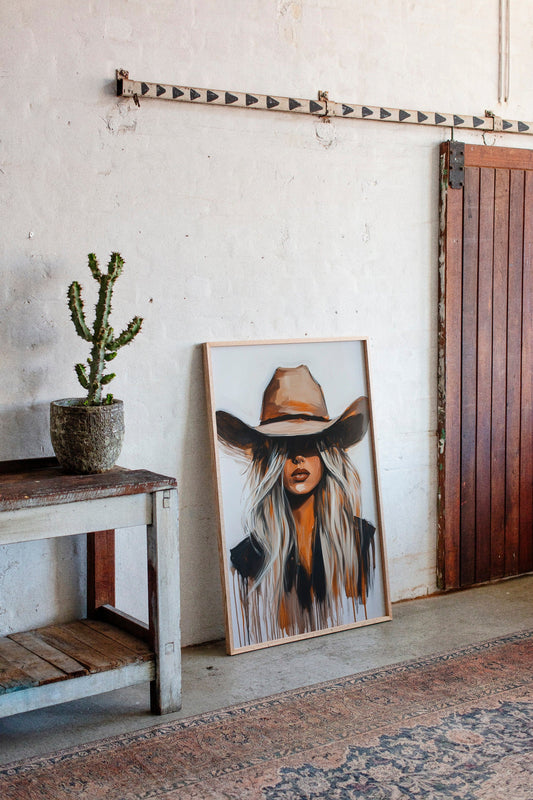
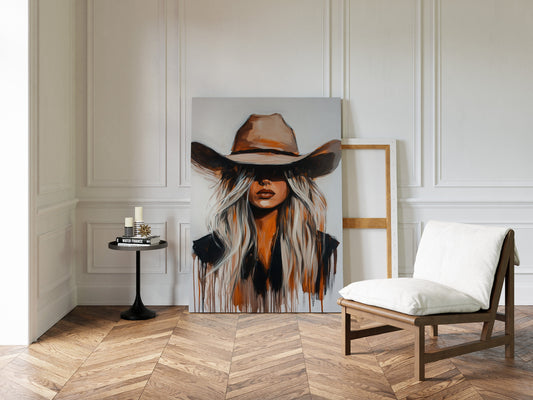
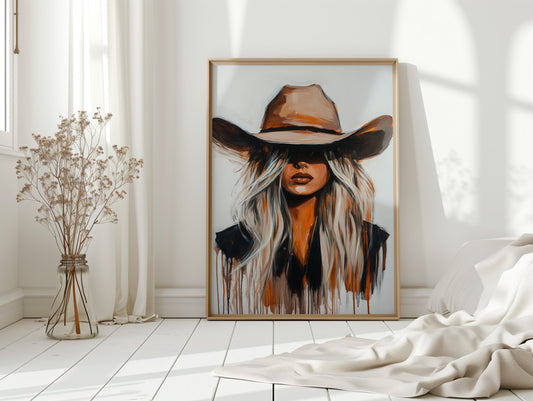
You found the piece. The moody landscape, the botanical study, the cowgirl with the thousand yard stare. Then the product page asks one more question: poster, canvas, or framed canvas? It feels like a detail, but it decides how the art sits on the wall, how it catches light, and whether it reads as a print or as a finished piece. Here is how to settle the canvas vs poster wall art question for your room, and when framed canvas is worth the step up.

 Canvas vs Poster Wall Art: The Short Answer 

Choose by size and job, not by habit. Small pieces that fill a shelf, a hallway, or a gallery wall work beautifully as posters. Mid to large pieces that need presence without glare belong on gallery canvas. And the one piece meant to anchor a room, above the sofa or the bed, earns a framed canvas.

Our own customers tend to land on the same rule without being told. Posters lead at the smallest sizes, while framed canvas is the clear favorite once a piece reaches statement scale.

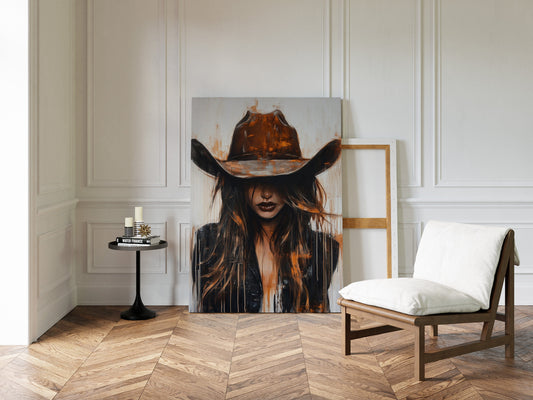
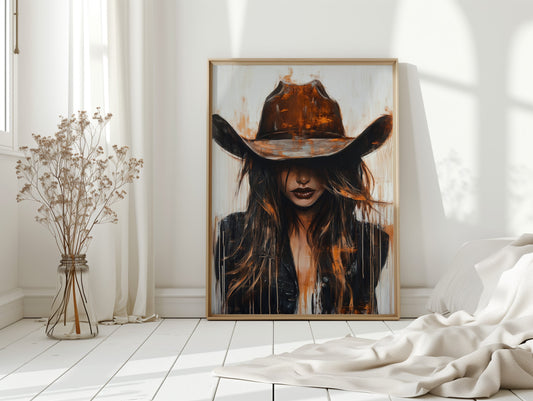
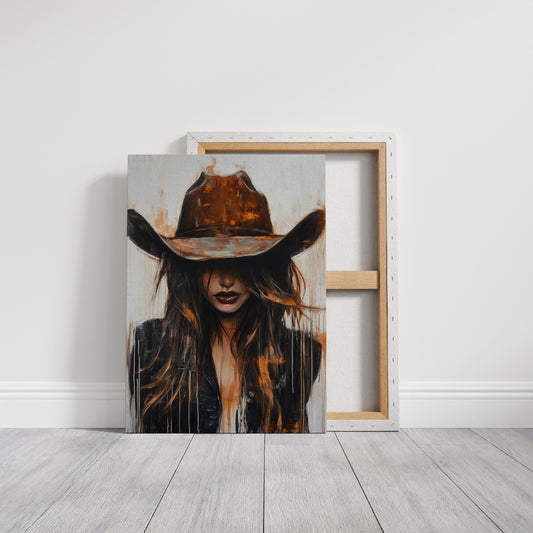
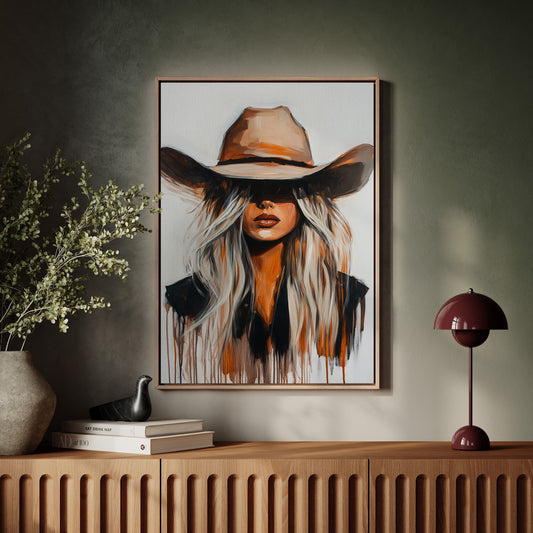
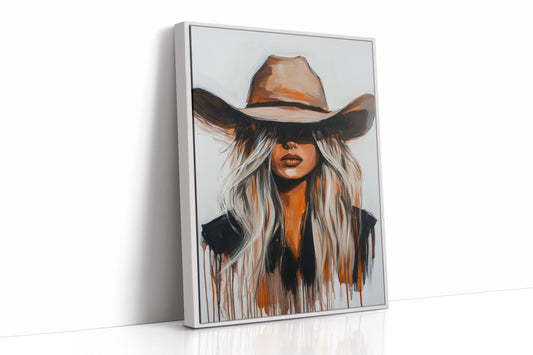
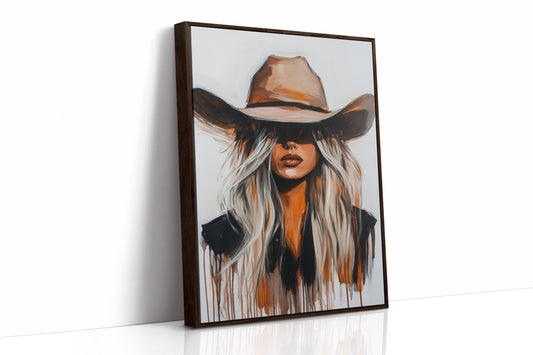
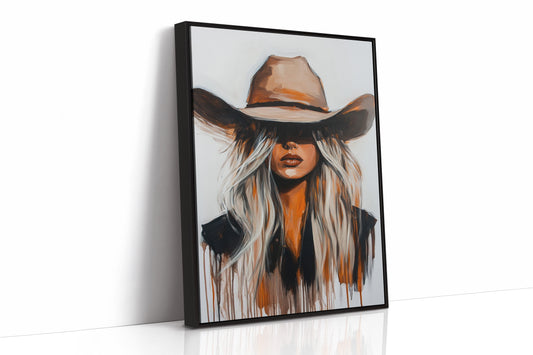
Here is the difference at a glance. A matte poster arrives as an unframed print, so the frame, and any glare that comes with glass, is up to you. It is the most affordable of the three and the most flexible. A gallery canvas arrives stretched and ready to stand on its own, with no glass and no glare, and sits in the middle on price. A framed canvas adds a finished frame in white, brown, or black around that same glare free canvas. It is the biggest investment and the most finished look.

 The Matte Poster: Light, Flexible, and Built for Your Own Frame 

A matte poster is the most adaptable of the three. The finish has no shine, so color stays true from across the room and the surface never fights a lamp or a window. It is also the easiest to live with if you rearrange often, move every year or two, or rotate art with the seasons.

The tradeoff is that a poster is the beginning of a finished piece, not the end of one. Pinned or taped, it reads as a dorm room. Set into a frame with a generous mat, it reads as a collection. Choose a poster when you already own frames you love, when you want a specific moulding to match the room, or when the piece will live in a tight grid where every frame needs to match.

 The Gallery Canvas: Depth Without Glass 

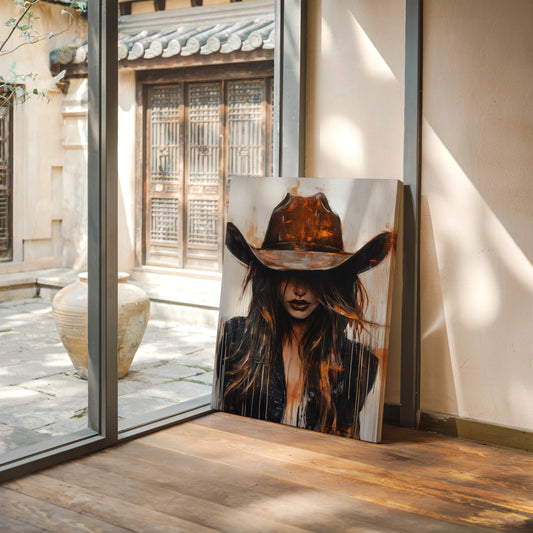
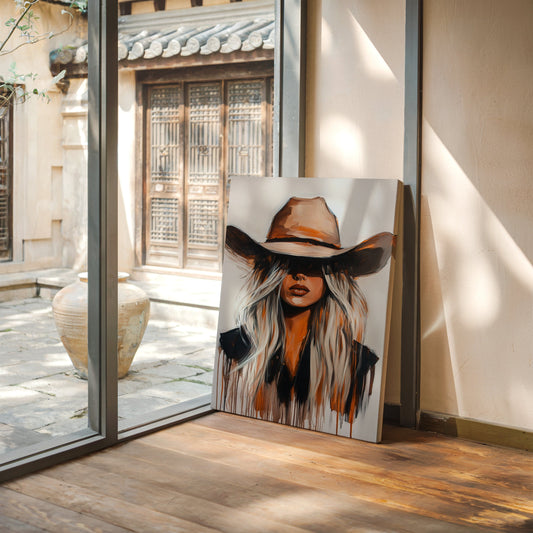
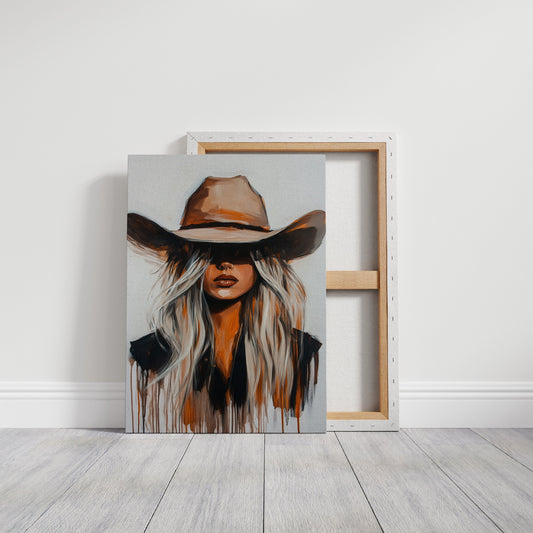
Gallery canvas is stretched over a wooden frame, so the art has physical depth and casts a slight shadow on the wall. With no glass in front of it, nothing reflects. That makes it the strongest choice for rooms flooded with daylight, for walls opposite a window, and for any piece large enough that glazing would get heavy and expensive.

Canvas also changes the way an image reads. The woven surface softens fine detail just enough to give photography and painted styles a warmer, more tactile quality, which suits moody landscapes, abstracts, and anything painterly. It hangs clean and modern with no frame at all, which keeps the focus on the image rather than the border around it.

 The Framed Canvas: The Finished Statement 

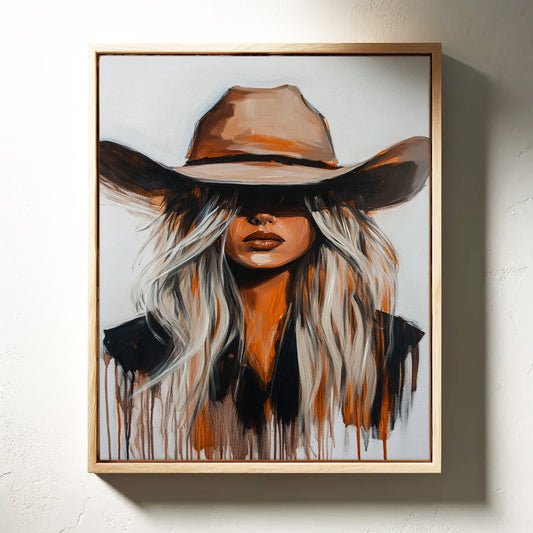
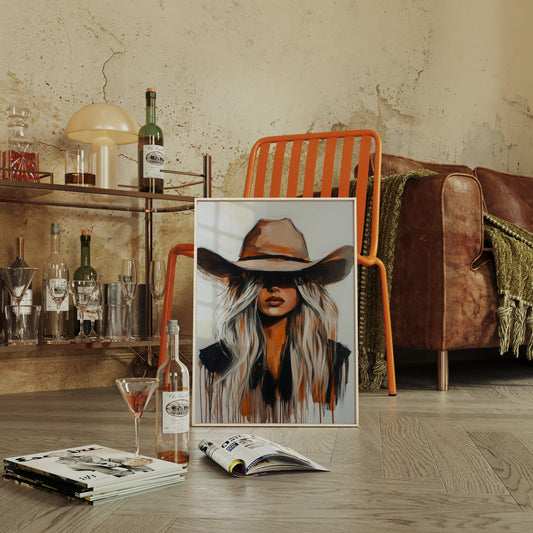
Framed canvas takes the depth of a gallery canvas and sets it inside a finished frame. The frame does two quiet jobs. It defines the edge of the piece, so a large canvas reads as deliberate rather than floating, and it ties the art to the wood tones and metal finishes already in the room.

This is the format for the piece the whole room organizes itself around: the landscape over the sofa, the large portrait above a headboard, the single canvas facing the front door. It costs the most of the three, and it is the one format that arrives ready to look finished the day it goes up.

 Size Is the Real Decider 

If you remember one thing, make it this: the bigger the piece, the more it benefits from canvas. Paper at large sizes needs a large frame and, usually, a large sheet of glazing, which adds weight and reflection. Canvas scales up without either problem.

At 9 x 11 and 12 x 16 inches, choose a matte poster in your own frame. Small pieces are seen up close, where a crisp mat and a well chosen frame read as considered.

At 18 x 24 and 20 x 30 inches, you are in the middle ground. Gallery canvas and framed canvas both work here, so let the room decide using the guide below.

At 24 x 36 inches and up, go with framed canvas or gallery canvas. Large scale needs physical depth and a glare free surface to hold a wall.

For panoramic sizes like 12 x 36 and 20 x 60 inches, canvas in either form is the natural fit. These long horizontals were made for the space above sofas, beds, and consoles.

Scale still follows the classic two thirds rule: art above furniture should span roughly two thirds to three quarters of the furniture's width. Above an 84 inch sofa, that points to a 40 x 60 landscape canvas or a 20 x 60 panoramic. Above a 60 inch queen headboard, try a 32 x 48 landscape or a pair of 20 x 30 portrait canvases hung about 3 inches apart. Our wall art size guide walks through every common furniture width.

 Room by Room: Which Format Works Where 

Living room

The living room is where framed canvas earns its price. One large framed piece above the sofa gives the eye a single place to land and lets everything else in the room quiet down. Match the frame to the dominant wood or metal in the room, and the art will look like it was always meant to be there.

Bedroom

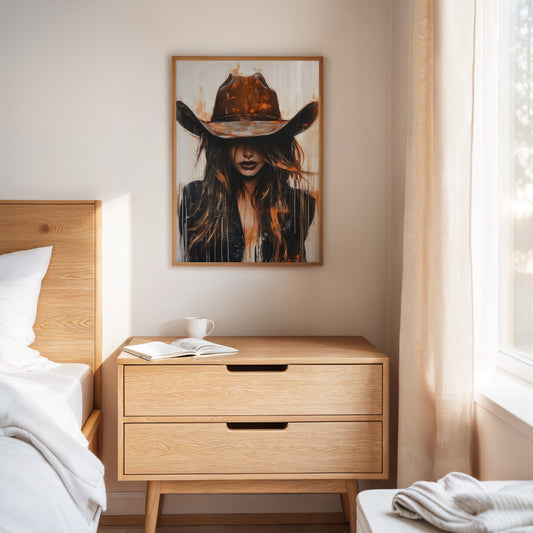
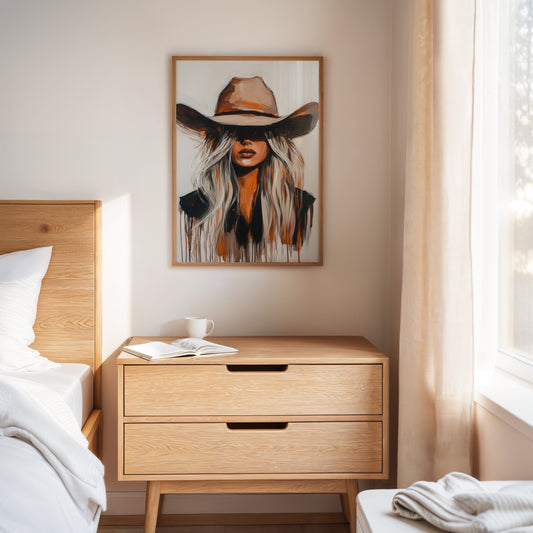
Above the bed, choose canvas or framed canvas for the same reason: scale. On nightstand walls, beside a dresser, or in a reading corner, small matte posters in simple frames keep things soft and personal. A bedroom rarely needs more than one statement piece.

Bathroom and kitchen

These rooms bring steam, splashes, and bright overhead light. Canvas suits them well because there is no glass to fog or reflect the vanity lights. Hang it on the wall farthest from the shower or stove, and make sure the room is well ventilated. For ideas on what to hang, see our guides to bathroom wall art and editorial kitchen wall art.

Hallways, gallery walls, and rentals

This is poster territory. A run of small matte posters in matching frames makes a gallery wall look curated rather than collected by accident, and swapping a single print takes minutes. Posters are also the lightest option for renters who want to keep wall holes small. If you are planning a mixed wall, our guide on how to mix and match art styles covers how to keep it cohesive.

 White, Brown, or Black: Choosing a Frame Color 

If you go with framed canvas, the frame color is the last decision, and it matters more than it looks.

Brown is the most chosen frame in our shop, and for good reason. It warms up landscapes, botanicals, and western pieces, and it sits comfortably beside oak, walnut, leather, and linen.

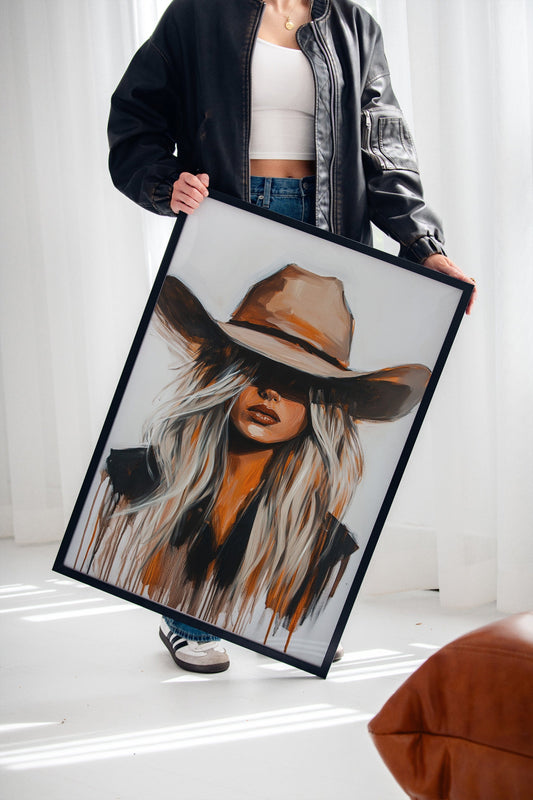
Black sharpens. It gives graphic art, line drawings, high contrast photography, and moody Western Gothic pieces a crisp edge, and it echoes black hardware, iron lighting, and modern furniture.

White recedes. It lets soft palettes breathe and suits coastal rooms, Scandinavian and Japandi spaces, and nurseries, where the goal is light rather than weight.

When in doubt, pull the frame color from something already in the room: a coffee table, a curtain rod, a lamp base.

 A Quick Checklist Before You Choose 

  • Measure first. Know the width of the furniture below and the wall itself before you pick a size.
  • Check the light. A bright, sunny wall favors canvas, which has no glass to reflect.
  • Decide if it is the anchor. The one piece the room centers on deserves framed canvas.
  • Count the pieces. Several small works for one wall point to posters in matching frames.
  • Think about how often you will change it. Frequent swaps favor posters; a long term piece favors canvas.
  • Match the frame to the room, not to the art alone.

Find the Format That Fits

The right format is the one that lets the art do its job in that specific spot: a small poster that invites a closer look, a canvas that holds its own in full sun, a framed piece that steadies a whole room. Start with the wall, then choose the art. Browse large statement wall art to see framed canvas at full scale, or read our guide to the best large wall art for modern homes for pieces built to anchor a room.

———

✦  ✦  ✦

Whether you're starting from scratch or adding to an existing collection, Kooly Design makes it easy to find pieces that play well together—even when they're beautifully different.

💌 Want more design tips? Sign up for our newsletter and get styling guides, new releases, and exclusive discounts delivered to your inbox.

📸 Show us your mixed-style walls! Tag @KoolyDesign on Instagram—we love seeing your creativity.

Ready to find your perfect pieces?

✨ Browse our complete wall art collections to discover hundreds of designs created specifically for modern homes like yours.

💌 Want first access to new designs and styling tips?: Sign up for our newsletter and join thousands of design lovers getting weekly inspiration delivered straight to their inbox.

📱 Follow us on social: Find daily design inspiration and see how other customers are styling their Kooly pieces on  Instagram and  Pinterest.

Your walls are waiting – let's make them beautiful together.

Back to blog

Leave a comment